
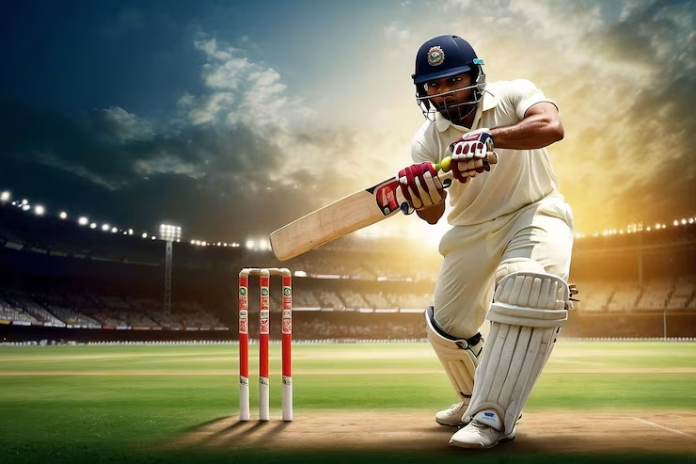
Cricket is a game of precision, rules, and well-defined markings on the field. One of the most important elements of the pitch layout is the crease, which plays a crucial role in determining key aspects of the game such as batting safety, bowling legality, and umpiring decisions.
If you are wondering how many creases are there in cricket, the answer is simple yet often misunderstood. This detailed guide will explain everything about cricket creases, including their types, purpose, rules, and importance.
What Is a Crease in Cricket?
A crease in cricket is a line marked on the pitch that serves as a reference point for players and umpires. These lines are drawn using white paint or chalk and are essential for regulating gameplay.
Creases help in:
- Determining whether a batter is safe or out
- Ensuring bowlers deliver the ball legally
- Defining the position of the wicket
Total Number of Creases in Cricket
At each end of the pitch, there are four crease lines:
- 1 Bowling Crease
- 1 Popping Crease
- 2 Return Creases
Since a cricket pitch has two ends, the total number of creases becomes:
👉 4 creases × 2 ends = 8 creases in total
Types of Creases in Cricket
1. Bowling Crease
The bowling crease is the primary horizontal line on the pitch.
Key Features:
- Passes through the center of the stumps
- Defines the position where the wicket is placed
- Runs parallel to the popping crease
Importance:
- Bowlers must deliver the ball from behind this line
- Helps umpires judge legal deliveries
2. Popping Crease
The popping crease is one of the most critical lines for batters.
Key Features:
- Located about 4 feet (1.22 meters) in front of the bowling crease
- Runs parallel to the bowling crease
Importance:
- Determines whether a batter is safe or out
- Used in:
- Run-outs
- Stumpings
👉 A batter must have part of their bat or body grounded behind this line to avoid being dismissed.
3. Return Crease
There are two return creases at each end of the pitch.
Key Features:
- Drawn perpendicular to the bowling crease
- Extend on both sides of the pitch
Importance:
- Bowlers must stay within these lines while delivering the ball
- Stepping outside results in a no-ball
Layout of Creases on the Pitch
At one end of the pitch, the crease arrangement looks like this:
- A horizontal bowling crease passing through the stumps
- A parallel popping crease in front
- Two vertical return creases on either side
This structure is mirrored at the other end of the pitch.
Why Are Creases Important in Cricket?
Creases are fundamental to the game and affect multiple aspects:
1. Batting Safety
The popping crease determines whether a batter is safe from being run out or stumped.
2. Bowling Legality
The return crease ensures that bowlers deliver the ball within legal limits.
3. Umpiring Decisions
Umpires rely heavily on crease lines for decisions such as:
- Run-outs
- Stumpings
- No-balls
4. Game Structure
Creases help maintain fairness and consistency in the game.
Rules Related to Creases
Batting Rules
- A batter must remain behind the popping crease to be safe
- Leaving the crease without grounding the bat can lead to dismissal
Bowling Rules
- Bowler’s front foot must land behind the popping crease
- Bowler must not cross the return crease
Fielding Rules
- Fielders and wicketkeepers use the crease as a reference for dismissals
Common Mistakes About Creases
Many beginners misunderstand the concept of creases. Here are some common misconceptions:
- Thinking there are only 3 creases (ignoring return creases)
- Confusing bowling crease with popping crease
- Assuming creases are only important for bowlers
👉 In reality, creases are equally important for both batters and bowlers.
Dimensions and Measurements
- Distance between bowling crease and popping crease: 4 feet (1.22 meters)
- Return creases are drawn at right angles to the bowling crease
- All lines are clearly marked for visibility
Role of Creases in Modern Cricket
With advanced technology like DRS and third umpire decisions, creases have become even more important.
They are used in:
- Ultra-edge and replay analysis
- Run-out reviews
- No-ball detection systems
Evolution of Creases
Creases have been part of cricket for centuries, but their markings and rules have evolved over time to ensure fairness and clarity in gameplay.
Modern cricket uses standardized measurements regulated by organizations like the International Cricket Council.
Simple Summary
- There are 4 creases at each end of the pitch
- Total 8 crease lines in a cricket field
- Includes:
- Bowling crease
- Popping crease
- Two return creases
Conclusion
Understanding creases is essential for anyone learning cricket. They are not just lines on the pitch but fundamental elements that define the rules and structure of the game.
To answer the main question:
👉 There are four creases at each end of a cricket pitch, making a total of eight crease lines overall.
These creases ensure fair play, guide players, and help umpires make accurate decisions. Whether you are a beginner or an experienced fan, knowing about creases enhances your understanding of cricket significantly.