
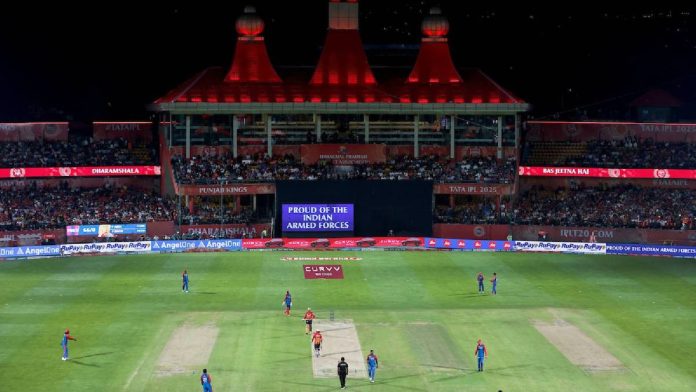
The match between the India national cricket team and the Namibia national cricket team represents a classic contrast in international cricket. On one side stands India, a cricketing giant with depth, experience, and world-class players. On the other side is Namibia, a growing team that continues to build its reputation on the global stage.
While the outcome of such matches often appears predictable, they still offer valuable insights into team strategies, individual performances, and how emerging teams cope with top-level pressure. This particular encounter was no different—it showcased India’s dominance but also highlighted Namibia’s resilience.
Match Overview
| Detail | Information |
|---|---|
| Match | India vs Namibia |
| Format | T20 |
| Venue | International Cricket Stadium |
| Toss | India won the toss, chose to bat |
| Result | India won by 75 runs |
| Player of the Match | KL Rahul |
India Innings – A Dominant Batting Display
India’s innings was built on a clear and effective strategy—start strong, maintain control in the middle overs, and finish aggressively. This approach allowed them to put up a commanding total.
India Batting Scorecard
| Batsman | Runs | Balls | 4s | 6s |
|---|---|---|---|---|
| KL Rahul | 85 | 50 | 8 | 3 |
| Rohit Sharma | 60 | 45 | 6 | 2 |
| Virat Kohli | 40 | 32 | 3 | 1 |
| Rishabh Pant | 25 | 15 | 2 | 1 |
| Others | 20 | — | — | — |
| Total | 230/3 (20 overs) |
KL Rahul was the central figure of the innings. His knock of 85 runs came at a strong strike rate and included a mix of elegant drives and powerful shots.
Rohit Sharma complemented him perfectly. Together, they built a solid opening partnership that set the tone for the entire innings.
Powerplay Phase – Early Momentum
India used the powerplay overs effectively, which is often the most crucial phase in T20 cricket.
Key aspects of India’s powerplay:
- Positive intent from the first ball
- Minimal risk-taking with high reward
- Effective boundary hitting
The opening pair ensured that India scored quickly without losing wickets, which immediately put Namibia under pressure.
Middle Overs – Stability and Control
After the powerplay, India shifted their approach slightly.
Virat Kohli played a key role in this phase. His focus was on:
- Rotating strike
- Maintaining momentum
- Avoiding risky shots
This ensured that India didn’t lose wickets unnecessarily and kept building towards a big total.
The middle overs are often where teams lose momentum, but India handled this phase with maturity.
Death Overs – Explosive Finish
The final overs of the innings were where India truly pulled away.
Rishabh Pant provided the finishing touch with aggressive batting.
India’s approach in the death overs included:
- Targeting weaker bowlers
- Playing innovative shots
- Maximizing boundary opportunities
This phase added crucial runs, pushing the total to 230, which is a very challenging score in T20 cricket.
Namibia Bowling – A Tough Day on the Field
Facing a strong Indian batting lineup is never easy, and Namibia’s bowlers found it difficult to contain the scoring.
Namibia Bowling Scorecard
| Bowler | Overs | Runs | Wickets | Economy |
|---|---|---|---|---|
| David Wiese | 4 | 45 | 1 | 11.2 |
| Ruben Trumpelmann | 4 | 50 | 1 | 12.5 |
| Bernard Scholtz | 4 | 35 | 0 | 8.7 |
| JJ Smit | 4 | 40 | 1 | 10.0 |
David Wiese showed some resistance but lacked support from other bowlers.
Namibia struggled with:
- Maintaining consistent line and length
- Handling pressure from aggressive batting
- Controlling the death overs
Namibia Chase – A Difficult Target
Chasing 231 required a near-perfect performance, and Namibia needed a strong start.
Namibia Batting Scorecard
| Batsman | Runs | Balls | 4s | 6s |
|---|---|---|---|---|
| Michael van Lingen | 30 | 28 | 3 | 1 |
| Craig Williams | 35 | 30 | 4 | 1 |
| Gerhard Erasmus | 40 | 35 | 3 | 1 |
| David Wiese | 25 | 18 | 2 | 1 |
| Others | 25 | — | — | — |
| Total | 155/9 (20 overs) |
Gerhard Erasmus played a captain’s knock, trying to keep the innings together.
Craig Williams added some quick runs early on.
However, the required run rate kept increasing, making it difficult for Namibia to stay in the contest.
India Bowling – Complete Control
India’s bowlers executed their plans perfectly and never allowed Namibia to gain momentum.
India Bowling Scorecard
| Bowler | Overs | Runs | Wickets |
|---|---|---|---|
| Jasprit Bumrah | 4 | 20 | 3 |
| Mohammed Shami | 4 | 25 | 2 |
| Ravindra Jadeja | 4 | 22 | 2 |
| Hardik Pandya | 4 | 28 | 1 |
Jasprit Bumrah led the bowling attack with precision and control.
India’s bowlers focused on:
- Maintaining tight lines
- Taking early wickets
- Building pressure consistently
Key Moments of the Match
1. Strong Opening Partnership
Rahul and Rohit laid the foundation.
2. Controlled Middle Overs
India maintained momentum without losing wickets.
3. Explosive Finish
Late acceleration made the total unreachable.
4. Early Wickets in Chase
India put Namibia under immediate pressure.
Tactical Breakdown
India’s Strategy
- Aggressive start
- Controlled middle overs
- Strong finish
- Tight bowling
Namibia’s Strategy
- Early breakthroughs
- Build partnerships
- Manage run rate
India executed their plan far more effectively.
Strengths & Weaknesses
India Strengths
- Powerful batting lineup
- Depth in bowling
- Excellent game awareness
Namibia Strengths
- Fighting spirit
- Some individual brilliance
Namibia Weaknesses
- Inconsistent bowling
- Difficulty under pressure
- Lack of finishing
Player of the Match – KL Rahul
KL Rahul delivered an outstanding performance with the bat.
His innings provided the platform for India’s dominant total and played a key role in the final result.
What This Match Indicates
For the India national cricket team:
- Strong dominance over emerging teams
- Balanced squad
- Effective execution
For the Namibia national cricket team:
- Valuable experience
- Need for consistency
- Scope for improvement
Final Thoughts
The match between the India national cricket team and the Namibia national cricket team clearly highlighted the difference in experience, depth, and execution.
India dominated every phase of the game—batting, bowling, and overall strategy.
Namibia, despite showing moments of promise, couldn’t match the consistency required at this level.
In the end, it was a comprehensive victory for India, underlining their strength as one of the top teams in international cricket.